The Best High-MOI Putters for Stability, Consistency, and Better Distance Control
Putting is often where golfers lose the easiest strokes.
A slightly open face, a heel or toe strike, or a poor start line can turn a makeable putt into a miss. That is why forgiving putters have become so popular.
The best forgiving putters are designed to help reduce face twisting, preserve ball speed on off-center contact, improve alignment, and make your stroke feel more repeatable.
For 2026, Golf Gear Authority focused on high-MOI mallets and modern torque-reducing designs that give recreational golfers more help when contact is less than perfect.
Our top picks include models from L.A.B. Golf, TaylorMade, PING, and Scotty Cameron.


Most Forgiving Putters of 2026 at a Glance
| Putter | Best For | Head Style | Forgiveness Feature | GGA Rating |
|---|---|---|---|---|
| L.A.B. Golf DF3i | Best Overall | Mallet | Lie Angle Balance + high forgiveness | 5/5 |
| TaylorMade Spider Tour F Double Bend | Best Traditional High-MOI Mallet | Mallet | Face-balanced high-MOI design | 4.9/5 |
| PING Scottsdale Prime Tyne C | Best for Straight Strokes | Mallet | High MOI + center shaft | 4.9/5 |
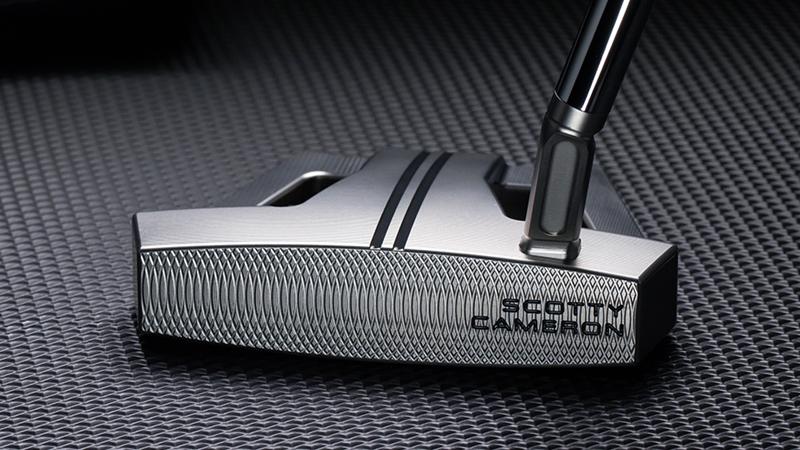
| Scotty Cameron Phantom 12 | Best Premium Putter | Large Mallet | Deep/low CG for maximum stability | 4.9/5 |
| TaylorMade Spider Tour Counterbalance | Best for Stroke Stability | Mallet | Counterbalanced face-balanced design | 4.8/5 |
Best Overall Forgiving Putter
L.A.B. Golf DF3i
The L.A.B. Golf DF3i is our best overall forgiving putter for 2026 because it approaches forgiveness differently from a traditional high-MOI mallet.
Instead of relying only on head size and perimeter weighting, L.A.B. uses its Lie Angle Balance technology to reduce torque during the stroke. L.A.B. says the DF3i stays square by itself and is extremely forgiving on mishits. It also adds a stainless-steel insert for golfers who prefer a faster, firmer feel than the original DF3.


Why We Like It
- Lie Angle Balance technology
- Designed to reduce torque
- Extremely forgiving on mishits
- Compact mallet profile
- Stainless-steel insert
- Firmer, faster feel than standard DF3
- Multiple custom-fitting options
- Strong alignment features
Best For
Golfers who struggle with face rotation, inconsistent start direction, or excessive manipulation of the putter during the stroke.
Golf Gear Authority Take
The DF3i is not a conventional putter.
That is exactly why it earns our top spot.
Traditional putters often require the golfer to manage some amount of torque throughout the stroke. L.A.B.’s entire design philosophy is built around reducing that variable.
That does not mean every golfer will instantly putt better with one. The look and feel are different, and proper length and lie-angle fitting are important.
But if forgiveness means help keeping the face stable even when your stroke isn’t perfect, the DF3i is one of the most interesting putters available in 2026.
The stock DF3i is currently listed at $499.
Best Traditional High-MOI Putter
TaylorMade Spider Tour F Double Bend
The TaylorMade Spider Tour F Double Bend is one of the strongest choices for golfers who want forgiveness in a more familiar mallet design.
TaylorMade describes the Spider family as being trusted for stability, forgiveness, and high-MOI performance. The 2026 Tour F Double Bend is fully face-balanced and uses two forward weights to position the center of gravity 22mm behind the leading edge. Its wider blade length and lightweight aluminum sole plate are also designed to increase forgiveness.


Why We Like It
- High-MOI construction
- Fully face-balanced
- Stable on off-center strikes
- Wider head shape
- Pure Roll insert
- HYBRAR ECHO damping
- Strong alignment cues
- Premium 2026 torched PVD finish
Best For
Golfers with a straight-back, straight-through stroke who want excellent stability without moving into an unconventional putter shape.
Golf Gear Authority Take
Spider has become almost synonymous with forgiving mallet putters.
The 2026 Tour F Double Bend continues that approach while giving golfers a head that feels more traditional than something like a DF3i.
The fully face-balanced configuration is particularly attractive to golfers who prefer minimal face rotation, while the wider head and high-MOI construction help stabilize the putter when contact drifts away from the center.
If you’re moving from a blade to your first forgiving mallet, the Spider Tour F may be one of the easiest transitions.
Best Forgiving Putter for Straight Strokes
PING Scottsdale Prime Tyne C
The PING Scottsdale Prime Tyne C is designed around stability and a center-shafted setup.
PING describes the Prime Tyne C as a high-MOI putter with heel-toe weighting that creates stability and supports a more predictable stroke. The one-piece PEBAX insert is designed to provide consistent speed across the face, helping preserve distance control on less-than-perfect contact.


Why We Like It
- High-MOI head
- Center-shafted design
- Heel-toe weighting
- Strong stability
- PEBAX face insert
- Consistent ball speed across the face
- Straight-stroke configuration
- Clear alignment profile
Best For
Golfers who use a straight putting stroke and like a center-shafted putter with minimal visual offset.
Golf Gear Authority Take
PING has quietly built one of the better forgiving putter families with the Scottsdale line.
The key here is not just MOI.
The one-piece insert is intended to help keep speed more consistent across the face, which matters when you catch a putt slightly toward the heel or toe.
That can help with one of the most frustrating parts of putting: hitting what feels like a decent stroke but leaving the ball unexpectedly short because contact wasn’t perfectly centered.
If center-shafted putters fit your eye, the Prime Tyne C is an excellent combination of stability and simplicity.
Best Premium Forgiving Putter
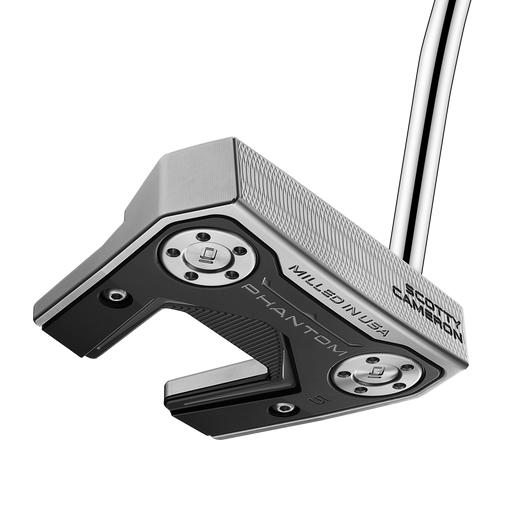
Scotty Cameron Phantom 12
The Scotty Cameron Phantom 12 is one of the most important additions to the 2026 Phantom family because it was specifically designed around maximum stability and forgiveness.
Titleist says the Phantom 12 has the deepest and lowest center of gravity of any Phantom putter, using a large, confidence-inspiring footprint to maximize stability and forgiveness.


Why We Like It
- Largest forgiveness-focused Phantom design
- Very deep and low CG
- High-MOI mallet construction
- Large confidence-inspiring footprint
- Premium milled construction
- Studio Carbon Steel face insert
- Soft feel
- Strong distance-control focus
- Premium Scotty Cameron craftsmanship
Best For
Golfers who want maximum forgiveness without giving up premium feel, materials, and traditional putter craftsmanship.
Golf Gear Authority Take
Scotty Cameron is often associated with feel and craftsmanship more than outright forgiveness.
The Phantom 12 changes that equation.
Titleist specifically built the 2026 Phantom 12 to maximize stability, making it much more than simply a premium-looking mallet.
The larger head won’t appeal to golfers who prefer compact putters, but that’s not the target player.
This is for someone who wants a premium Scotty Cameron while also wanting as much stability as possible from the Phantom lineup.
Best Forgiving Putter for a Smoother Stroke
TaylorMade Spider Tour Counterbalance
The TaylorMade Spider Tour Counterbalance combines the forgiveness of the Spider platform with a heavier grip and counterbalanced setup designed to encourage a smoother, more pendulum-like stroke.
TaylorMade uses a fully face-balanced double-bend hosel and a heavier SuperStroke 2.0 XL grip. The added mass in the grip is intended to help golfers create greater consistency through impact.


Why We Like It
- High-MOI Spider platform
- Fully face-balanced
- Counterbalanced construction
- Heavy SuperStroke grip
- Pendulum-like stroke feel
- True Path alignment system
- Excellent stability
- Premium 2026 finish
Best For
Golfers whose hands become too active during the putting stroke and who want a heavier, more stable setup.
Golf Gear Authority Take
Not every putting problem comes from the putter head.
Some golfers simply become too handsy through impact.
Counterbalancing changes how the entire putter feels rather than simply making the head larger.
The result can be a smoother stroke with less manipulation, particularly for golfers who already like the stability of a Spider but want more help controlling tempo.
If traditional-length mallets still feel too active in your hands, this is worth trying.
What Makes a Putter Forgiving?
High MOI
MOI stands for moment of inertia.
In simple terms, a high-MOI putter is designed to resist twisting when you strike the ball away from the center of the face.
That can help preserve:
- Start direction
- Ball speed
- Distance control


This is why larger mallets tend to dominate discussions about forgiveness.
TaylorMade specifically describes Spider models as high-MOI designs built for stability and forgiveness.
Why Off-Center Speed Matters
A putt struck from the center of the face may roll 20 feet.
If a toe strike with the same stroke only rolls 17 feet, you suddenly have a much longer second putt.
Forgiving putters attempt to reduce that difference.
PING’s Scottsdale insert, for example, is designed to produce more consistent performance across the face and reduce speed loss on mishits.
That matters just as much as directional stability.
Face-Balanced vs. Toe-Hang Putters
Forgiveness doesn’t automatically mean face-balanced.
Your stroke still matters.
Face-Balanced Putters
Often work well for golfers with:
- Straight-back, straight-through strokes
- Minimal face rotation
- More linear putting motions
Examples in this guide include the Spider Tour F Double Bend and Spider Tour Counterbalance.
Toe-Hang Putters
Often work better for golfers who naturally rotate the face more through the stroke.
That is why fitting still matters, even when buying a forgiving putter.
Mallet vs. Blade: Which Is More Forgiving?
In general, mallets have an advantage.
Their larger head shapes provide more room to move mass away from the center and increase MOI.


That does not mean every blade is unforgiving or every mallet is perfect.
But golfers who consistently miss the center of the face should seriously consider testing a mallet.
Should High Handicappers Use a Forgiving Putter?
Usually, yes.
A high-handicap golfer doesn’t necessarily have a bad putting stroke, but many recreational players benefit from:
- Easier alignment
- Greater stability
- More consistent speed
- Larger visual footprint
- Reduced twisting on mishits
There is very little downside to adding forgiveness unless the larger shape makes you uncomfortable over the ball.
Most Forgiving Putters of 2026 by Category
Best Overall: L.A.B. Golf DF3i
Best Traditional High-MOI Mallet: TaylorMade Spider Tour F Double Bend
Best for Straight Strokes: PING Scottsdale Prime Tyne C
Best Premium: Scotty Cameron Phantom 12
Best Counterbalanced: TaylorMade Spider Tour Counterbalance
Final Verdict
Our most forgiving putter of 2026 is the L.A.B. Golf DF3i.
Its combination of Lie Angle Balance, strong mishit performance, compact mallet construction, and extensive fitting options makes it one of the most distinctive forgiveness-focused putters available. L.A.B. specifically describes the DF3 platform as staying square by itself and being highly forgiving on mishits.
For golfers who prefer a more traditional-looking mallet, we’d choose the TaylorMade Spider Tour F Double Bend. Its face-balanced, high-MOI construction provides excellent stability while still looking familiar at address.
The PING Scottsdale Prime Tyne C is particularly strong for straight-stroke golfers, while the new Scotty Cameron Phantom 12 is our premium choice thanks to its deep, low center of gravity and forgiveness-focused 2026 design.
And if your main problem is excessive hand action, the Spider Tour Counterbalance gives you another way to create stability without completely changing putter families.
The main lesson is simple:
You don’t have to strike every putt perfectly to putt well. A forgiving putter can help make your imperfect strokes produce more predictable results.