Graphite vs Steel Shafts (2026)
Weight. Feel. Performance. Choosing the Right Shaft for Your Game.
When golfers think about equipment upgrades, they usually focus on clubheads.
But the shaft plays just as important of a role.
It directly impacts:
- Distance
- Accuracy
- Ball flight
- Feel
Choosing between graphite and steel shafts isn’t about which is better.
It’s about which is better for your swing.
At Golf Gear Authority, we break down equipment decisions based on performance, not assumptions.
Here’s everything you need to know about graphite vs steel shafts.
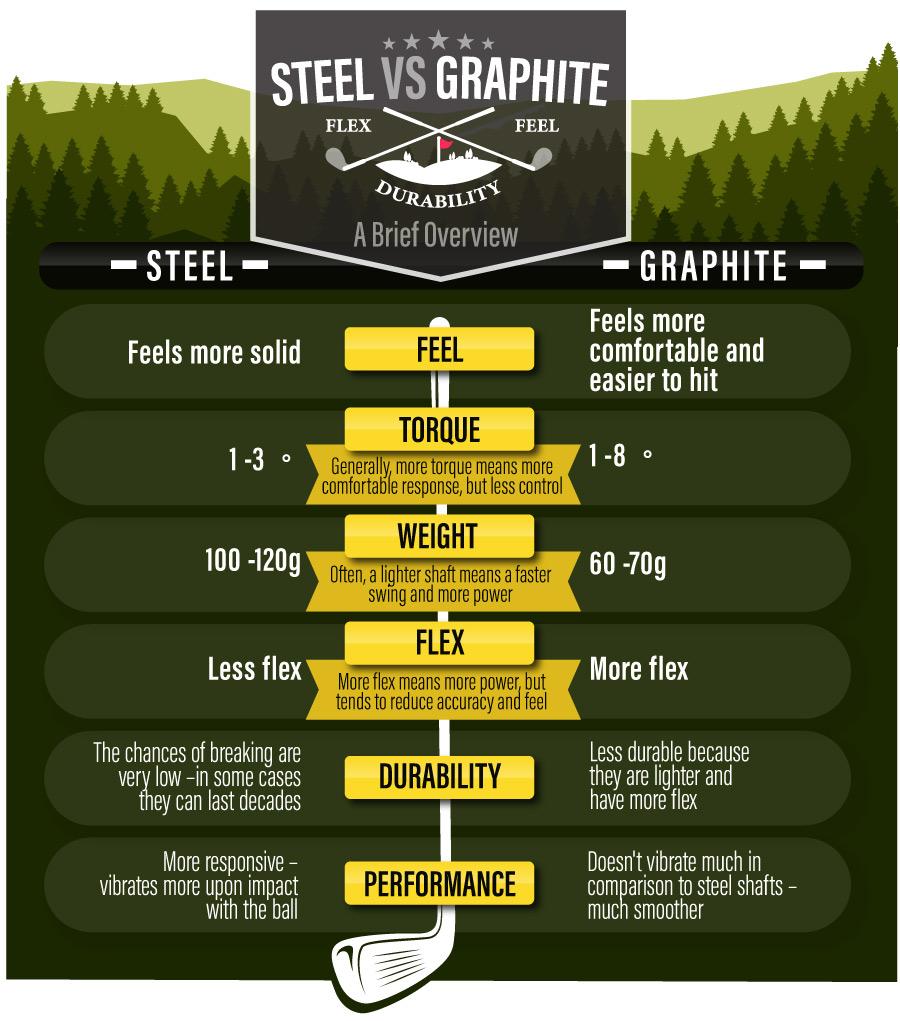
Quick Comparison – Graphite vs Steel Shafts
| Category | Graphite Shafts | Steel Shafts |
|---|---|---|
| Weight | Lightweight | Heavier |
| Swing Speed | Easier to increase | Requires more effort |
| Feel | Softer | Firmer |
| Vibration | Dampened | More feedback |
| Control | Moderate | High |
| Best For | Slower swing speeds | Faster swing speeds |
What Are Graphite Shafts?


Graphite shafts are made from carbon fiber materials designed to reduce weight while maintaining strength.
They are significantly lighter than steel shafts.
Why That Matters:
- Increased swing speed
- Easier launch
- Reduced fatigue
Modern graphite shafts have improved dramatically in stability and control, making them more viable for a wider range of players.
What Are Steel Shafts?


Steel shafts are made from high-strength metal and have been the standard in irons for decades.
They are heavier and provide more direct feedback at impact.
Why Golfers Use Them:
- Greater control
- More consistency
- Better feedback on strike quality
Steel shafts remain the preferred choice for many skilled players.
Key Differences That Matter
1. Weight
Graphite shafts are lighter — often by 20–40 grams.
This helps:
- Increase swing speed
- Improve tempo
- Generate more distance
Steel shafts are heavier, which can help:
- Improve control
- Stabilize the swing
- Enhance consistency
2. Distance
Graphite shafts generally produce more distance because:
- Faster swing speeds
- Higher launch
Steel shafts can still produce distance, but rely more on:
- Consistent contact
- Efficient swing mechanics
3. Control and Accuracy
Steel shafts typically offer:
- Tighter dispersion
- More consistent ball flight
- Greater shot control
Graphite shafts can sometimes feel less stable — but modern designs have improved significantly.
4. Feel and Feedback
Graphite:
- Softer feel
- Less vibration
- More comfortable on mishits
Steel:
- Crisp feedback
- Better strike awareness
- More direct connection to the ball
5. Vibration and Comfort
Graphite shafts absorb more vibration.
This makes them ideal for:
- Players with joint pain
- Seniors
- Golfers who want a smoother feel
Steel shafts transmit more vibration, which can lead to fatigue over time.
Who Should Use Graphite Shafts?
Graphite shafts are ideal for:
- Slower swing speeds
- Seniors
- Beginners
- Golfers seeking more distance
- Players who want less strain on joints
They help maximize efficiency without requiring more effort.
Who Should Use Steel Shafts?
Steel shafts are better suited for:
- Mid to low handicappers
- Faster swing speeds
- Golfers who prioritize control
- Players who want consistent ball flight
They provide a more stable and predictable performance.
Are Graphite Shafts Only for Beginners?
No.
This is one of the biggest misconceptions in golf.
Modern graphite shafts are now used by:
- Competitive amateurs
- Tour professionals
- Fit golfers seeking optimized performance
The decision should be based on performance data, not skill level.
Graphite vs Steel in Irons
Most golfers still use steel shafts in irons.
Why?
- More control
- Better distance consistency
- Lower dispersion
However, graphite is becoming more common in irons due to:
- Improved technology
- Better stability
- Increased comfort
Graphite vs Steel in Drivers
Almost all drivers use graphite shafts.
Why?
- Weight reduction increases speed
- Easier to generate distance
- More flexible design options
Steel shafts are rarely used in drivers today.
Should You Switch Shafts?
Consider switching if:
- You’re losing distance
- Your swing speed has changed
- You experience fatigue or discomfort
- Your ball flight is inconsistent
The shaft plays a major role in performance.
The Importance of Fitting
The biggest mistake golfers make?
Choosing shafts based on assumptions.
A proper fitting will evaluate:
- Swing speed
- Launch angle
- Spin rate
- Ball flight
This ensures your shaft matches your swing.
Final Verdict – Graphite vs Steel
- Choose Graphite for: Distance, speed, comfort
- Choose Steel for: Control, consistency, feedback
Final Thought
The shaft is not just a component.
It’s a performance engine.
The right choice can:
- Increase distance
- Improve accuracy
- Enhance feel
And most importantly — help you play better golf.